
A contact eye exam is a separate appointment from your standard eye exam. It still checks your vision and overall eye health, but it layers on extra steps a regular exam doesn’t include: measuring the shape of your cornea, sizing your pupil and iris, checking your tear film, fitting a trial pair of lenses, and writing a prescription specific to wearing lenses directly on your eye. A regular eye exam gives you a glasses prescription. A contact lens exam gives you both, plus the fit details that make contacts actually work for your eyes day to day.
If you’re booking your first one, or you’re a current wearer whose prescription has gone stale, this post walks you through what happens at the appointment, how to prep, and why this visit is worth doing right.
A contact lens exam isn’t just a regular eye exam with a different prescription
Here’s the part that surprises a lot of first-timers: a glasses prescription and a contact lens prescription aren’t interchangeable. Glasses sit about 12 millimetres in front of your eye. Contacts sit directly on your cornea. That distance changes how the lens needs to bend light, which means the numbers on your contact prescription aren’t quite the same as the ones on your glasses prescription.
A contact lens prescription also includes details a glasses prescription doesn’t: base curve (how curved the lens is, to match your cornea), diameter (how wide the lens is), brand, and replacement schedule (daily, biweekly, or monthly). Skip the fitting, and there’s no good way to know which lens will sit comfortably on your eye without slipping, drying out, or causing irritation.
What actually happens at the appointment
Most contact eye exams run between 45 and 75 minutes, longer if you’re a first-time wearer learning insertion and removal. Here’s how the time usually breaks down.
The vision and eye health check
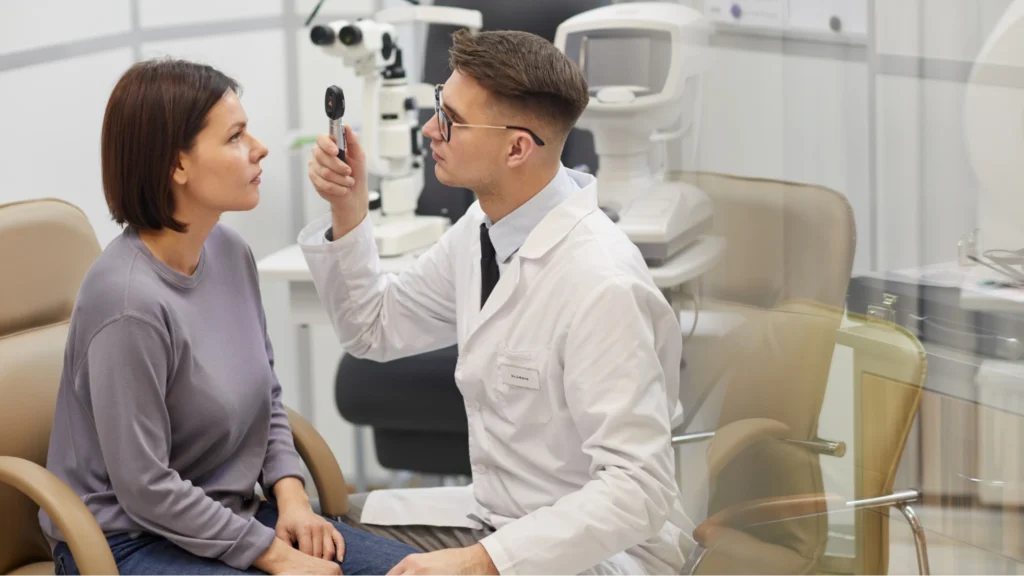
This part overlaps with a standard eye exam. The optometrist confirms your prescription, looks at the front and back of your eye, screens for things like glaucoma, cataracts, and retinal issues, and confirms your eyes are healthy enough to wear lenses in the first place. Some conditions, like severe dry eye, ongoing infections, or certain corneal irregularities, can make contact lens wear tricky or off the table entirely.
The corneal measurements
This is where the contact lens portion really starts. Your optometrist measures the curvature of your cornea using a keratometer or corneal topographer. Think of it like getting your foot measured before buying running shoes. The lens has to match the shape of your eye, or it won’t sit properly. They’ll also measure the diameter of your iris and pupil, since lens size depends on those numbers too.
The tear film check
Dry eyes and contact lenses don’t always play nicely. Your optometrist will check how much tear film your eyes produce and how quickly it evaporates. If you tend toward dryness, that information shapes which lens material gets recommended. Some modern lens materials hold moisture far better than others, and the right choice makes the difference between comfortable wear and giving up by 2 p.m.
The lens-type conversation
Based on your prescription, lifestyle, and eye measurements, the optometrist will recommend a lens type. The main options:
- Daily disposables: wear once, toss at the end of the day. Lowest maintenance, often the best pick for dry or sensitive eyes.
- Biweekly or monthly soft lenses: cleaned and stored nightly, replaced on a set schedule. Usually more economical over a year.
- Toric lenses: designed for astigmatism, weighted to stay oriented correctly on the eye.
- Multifocal lenses: for people in their 40s and up who need both distance and reading correction in one lens.
- Rigid gas permeable or scleral lenses: harder, specialty lenses for specific corneal conditions or when soft lenses don’t work.
The trial fitting
You’ll pop a trial pair in (or the optometrist will help you the first time). After the lenses settle for about 10 to 15 minutes, the optometrist evaluates how they sit on your eye, whether they move correctly when you blink, and how clearly you see through them. Tweaks happen here. You might try two or three brands before landing on one that feels right.
Insertion and removal training, if it’s your first time
If this is your first set of contacts, you’ll get a hands-on tutorial. Most people feel awkward the first few tries, especially the removal part. The clinic won’t let you leave with lenses until you can confidently put them in and take them out on your own. Plan for this part to take 20 to 30 minutes if you’re brand new.
The follow-up
A week or two after the exam, you’ll come back in to confirm the lenses are still comfortable, your vision is sharp, and your eyes look healthy with the new lenses on. This follow-up is usually part of the fitting fee, including at LMC Optometry & Eye Care.
How to prep so the appointment goes smoothly
A few practical things to do before you walk in:
- Bring your current glasses or contacts, even if the prescription has expired. The optometrist wants the data point.
- Bring your insurance info or benefits card if you have private coverage. Most clinics can direct-bill.
- Skip eye makeup that day, or be ready to remove it. Mascara residue makes lens handling messy.
- Plan a longer block than a regular exam. Don’t squeeze it into your lunch break.
- Have a sense of your lifestyle ready. Do you swim, hike, or spend nine hours staring at a screen? The optometrist will ask, and your answers shape the recommendation.
If you currently wear contacts, ask the clinic whether to show up wearing them or your glasses. Some assessments are easier with the lenses out for several hours first.
Why the annual check still matters
A contact lens prescription in Canada is typically valid for one to two years. That isn’t an arbitrary timer. Your eyes change. Prescription strength can shift, the shape of your cornea can move slightly with age or lens wear, and the lens that worked great last year might be drying you out by next August. The yearly check also catches the silent issues: small lens-related problems like neovascularization or giant papillary conjunctivitis often don’t have obvious symptoms until they’re well underway.
If you’re searching for a contact lens exam near me in Barrie, Thornhill, or Brampton, LMC Optometry & Eye Care runs full contact lens fittings and follow-ups at each of our Ontario locations.
Ready to book
If you’ve been thinking about switching from glasses to contacts, or your old contact prescription is getting dusty, the next step is straightforward. Book a contact lens exam with LMC Optometry & Eye Care today!
Frequently Asked Questions
What’s the difference between an eye exam and a contact lens exam?
A regular eye exam checks your vision and eye health and gives you a glasses prescription. A contact lens exam includes all of that, plus corneal measurements, a tear film check, a trial lens fitting, and a separate contact lens prescription that accounts for the lens sitting directly on your eye.
Can I use my glasses prescription to buy contacts?
No. A glasses prescription doesn’t include the base curve, diameter, brand, or replacement schedule needed to safely fit contacts. Reputable contact lens retailers won’t fill an order without a valid contact lens prescription from an in-person fitting.
How long does a contact lens exam take?
Most contact lens exams take 45 to 75 minutes. First-timers should plan closer to 90 minutes total to allow time for insertion and removal practice.
Does OHIP cover contact lens fittings in Ontario?
No. OHIP doesn’t cover contact lens fittings, regardless of your age or medical condition. The fitting and any follow-up visits are separate from a standard eye exam and are typically paid out of pocket or through private extended health insurance.
How often do I need a contact lens exam?
Once a year for most wearers. Contact lens prescriptions in Canada are usually valid for one to two years, and yearly checks catch shifts in prescription, fit issues, and any early eye health changes that wearing contacts can trigger.
Can everyone wear contact lenses?
Most people can, but not everyone. Severe dry eye, certain corneal conditions, frequent eye infections, or specific allergies can make contacts a poor fit. The exam itself is how you find out where you fall.
Should I wear my contacts or glasses to a contact lens exam?
Call ahead and ask. Some clinics prefer you arrive with the lenses out for several hours first so they can take cleaner measurements. Others are fine either way.