

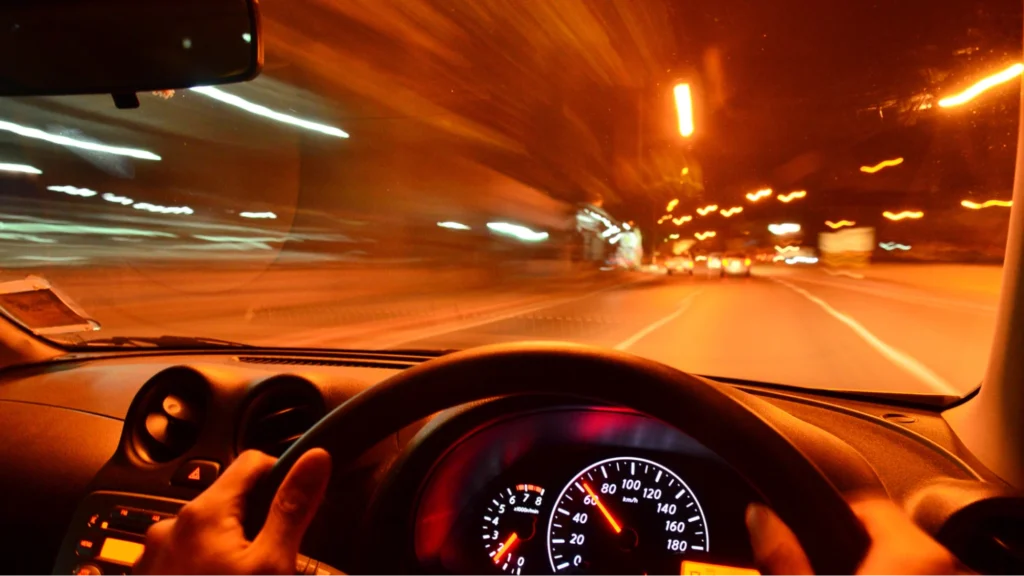
You used to hop in the car after dark without a second thought. Now the drive home feels like work. Oncoming headlights flare into a blinding starburst, streetlights wear glowing halos, and the road ahead looks dim and washed out, like someone turned down the contrast on the whole world. Maybe you’ve caught yourself gripping the wheel a little tighter, or quietly avoiding night trips altogether. If that sounds familiar, you’re in good company, and the good news is that most of the reasons this happens are fixable. In this post, we’ll walk through why night driving gets harder, which causes are simple to sort out versus a reason to get your eyes checked, the solutions that actually work, and whether those yellow night driving glasses are worth your money. By the end, you’ll know exactly what to try and when to book an exam.
Why does night driving get harder in the first place?
Some of the struggle is just how eyes work in the dark. In low light, your pupils open wider to let more light in, and a bigger pupil also lets in more of your eye’s tiny optical imperfections, which is what turns a distant headlight into a smeary starburst. Your night vision leans on the light-and-dark rod cells in your retina, so colour and fine detail drop off. Contrast sensitivity, your ability to tell a dark coat from a dark road, fades too. And your eyes need a good 20 to 30 minutes to fully adjust to darkness, which is why the jump from a lit gas station to a black country road feels so jarring.
On top of that, the eye ages. Starting around 40, the pupil gets a little smaller and slower to react, so it doesn’t bounce back as quickly after a bright light hits it. Today’s LED and HID headlights are brighter and harsher than the old halogens, which doesn’t help. So part of what you’re feeling is normal. The trick is knowing when it’s more than that.
The everyday causes you can usually fix
Here’s the part worth getting excited about, because several of the biggest culprits are simple to address.
An outdated or missing prescription is at the top of the list. Even a small, uncorrected vision error gets magnified in the dark once your pupil widens, so blur you’d never notice at noon can feel dramatic at midnight. If your prescription is more than a year or two old and night driving has gotten worse, an updated exam is the most practical first step.
Astigmatism deserves its own mention, because it’s the classic reason lights streak and smear at night. When the cornea is shaped more like a rugby ball than a basketball, it scatters incoming light instead of focusing it to a point, which is exactly what creates those starbursts and halos around headlights. Plenty of people don’t realize they have mild astigmatism until they’re squinting at oncoming traffic, and it’s easily corrected with glasses or contacts.
Dry eye is a sneakier one. Your eye needs a smooth, even tear film to focus cleanly, and when that film gets patchy, your vision blurs and scatters more light, often flickering between clear and fuzzy. Long days, screens, and Ontario’s dry winter heating all make it worse, and it tends to show up worse in the evening. Simple dry eye treatment can make a real difference here. And don’t overlook the low-tech stuff: smudged glasses and a filmy windshield, inside and out, scatter light and amplify glare. Cleaning both with a proper cloth before you drive is one of the cheapest fixes going.
When night vision trouble is worth an eye exam
Some causes go beyond a smudge or an old prescription. Early lens changes, or cataracts, are a common reason night glare ramps up as we get older. The lens inside the eye slowly clouds and yellows, scattering light and throwing halos around every bright source. Cataracts develop gradually, so the glare tends to creep up over months. They’re very manageable once diagnosed, which is why worsening night glare is a solid reason to get checked rather than just live with it.
A few signals mean you shouldn’t wait. Book an eye exam if oncoming headlights cause painful, disabling glare that takes a while to recover from, if halos and starbursts around lights are new or getting worse, if your night vision has clearly slipped over a short period, or if you’re starting to avoid night driving because it feels unsafe. None of these means disaster, but they’re your eyes asking for a proper look. At LMC Optometry & Eye Care, a comprehensive exam checks your prescription, your tear film, and the health of your lens and retina, so you find out what’s actually driving the problem instead of guessing.
The solutions that actually work
Let’s talk about what helps, starting with the one myth to skip. Those yellow-tinted night driving glasses sold as a glare cure don’t hold up. A 2019 study found that yellow-lens night driving glasses didn’t improve drivers’ ability to spot pedestrians at night, and the physics is the catch: any tint reduces the light reaching your eye, and at night, when you’re already short on light, making the scene darker is the opposite of what you want.
The genuinely effective fix for glasses wearers is an anti-reflective coating on clear lenses. It works two ways: cutting the internal reflections inside the lens that create halos, and letting more light pass through to your eye. Pair that with a current, accurate prescription centred properly over each pupil, and you’ve handled the two biggest levers you actually control. From there, a few habits stack on nicely. Keep your headlights and windshield clean, replace worn wiper blades, and dim your dashboard lights so your eyes aren’t fighting glare from inside the car. When headlights approach, shift your gaze slightly down and to the right edge of your lane instead of staring into the beam, and give your eyes those few extra seconds to recover.
Get a clear answer before your next night drive
Struggling to see after dark isn’t something you just have to accept, and it’s usually not a sign of anything scary. More often, it’s an old prescription, a touch of uncorrected astigmatism, dry eye, or early lens changes, all of which we can sort out. If you’re searching “optometrist near me” in Barrie, Thornhill, Brampton, or anywhere across our Ontario locations, the team at LMC Optometry & Eye Care can pin down what’s making your night driving harder and match you with the right lenses and coating for it. Book an eye exam whenever you’re ready, and get back to driving at night without the white-knuckle grip.
Frequently Asked Questions
Why is it hard to see while driving at night?
In the dark, your pupils widen, which lets in more light but also more of your eye’s optical imperfections, so headlights smear and halos appear. Aging eyes, uncorrected astigmatism or an outdated prescription, dry eye, and early cataracts all add to the glare. Brighter LED headlights make it more noticeable.
Do yellow night driving glasses actually work?
No. Research found that yellow-tinted night driving glasses didn’t help drivers detect pedestrians at night, and any tint reduces the light reaching your eyes, which can make seeing in the dark harder rather than easier.
What actually helps reduce glare when driving at night?
An up-to-date prescription plus an anti-reflective coating on clear lenses is the most effective combination. It cuts internal reflections and lets more light through. Clean glasses and windshield, dim dashboard lights, and looking slightly away from oncoming headlights all help too.
Can astigmatism make night driving harder?
Yes. Astigmatism scatters light instead of focusing it, which creates the starbursts and halos around headlights and streetlights that many people notice most at night. It’s easily corrected with glasses or contacts.
When should I see an optometrist about night vision problems?
See an optometrist if headlight glare is painful or disabling, if halos and starbursts are new or worsening, if your night vision has slipped noticeably, or if you’re starting to avoid driving after dark. These can point to an outdated prescription, dry eye, or early cataracts.
Is trouble seeing at night just a normal part of aging?
Some decline is normal, since the pupil shrinks and reacts more slowly from around age 40. But sudden or significant trouble isn’t something to shrug off, because it often has a very fixable cause worth checking.