

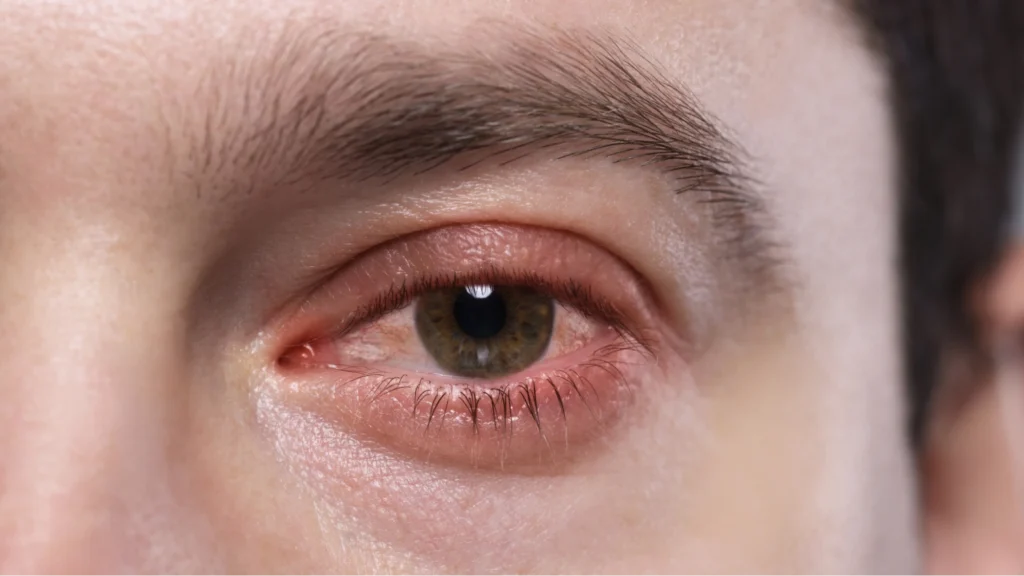
You wake up, look in the mirror, and one eye is red. Maybe it’s crusty, maybe it’s just watering nonstop, maybe it just itches like crazy. Now you’re stuck wondering: Is this pink eye? Allergies? Something worse? And do you actually need to see somebody, or will it sort itself out?
Pink eye treatment depends entirely on which type you have. Viral conjunctivitis usually clears on its own with cold compresses and good hygiene. Bacterial conjunctivitis often needs antibiotic eye drops from an optometrist. Allergic conjunctivitis responds to antihistamine drops and avoiding the trigger/cause. Antibiotics won’t touch a virus, allergy drops won’t fix an infection, and guessing wrong can drag things out for weeks. So let’s walk through how to tell them apart, what an optometrist actually checks for, and what to do in each case.
The Three Main Types of Conjunctivitis
Conjunctivitis just means inflammation of the conjunctiva, the thin, clear tissue covering the white of your eye and the inside of your eyelid. When it gets irritated, the blood vessels swell, your eye turns pink or red, and your tear glands go into overdrive. The reason it’s irritated is what matters.
- Viral conjunctivitis is the most common type in adults, and it’s often tied to the same viruses that cause the common cold. If you’ve had a runny nose and sore throat in the past week, then your eye starts watering and turning pink, that’s your likely culprit. It usually starts in one eye and spreads to the other a few days later.
- Bacterial conjunctivitis shows up more often in kids, especially school-aged ones. It’s the version that causes thick yellow or green discharge, the kind that glues your eyelashes shut overnight. You wake up and need a warm cloth just to open your eyes.
- Allergic conjunctivitis is your immune system overreacting, usually to pollen, pet dander, dust, or mould. It almost always affects both eyes at once, and the standout symptom is itching. Lots of itching. If you’re rubbing your eyes constantly and it’s spring or fall, allergies are probably in the mix.
How to Tell Which Type You Have
The symptoms overlap, but a few clues do most of the work.
- Watery discharge that’s mostly clear, redness that started in one eye, recent cold symptoms, and a feeling like there’s sand in your eye? That sounds viral.
- Thick, sticky, yellow or green discharge, crusting that seals your lashes shut in the morning, and usually one eye is affected first? That points to bacterial.
- Both eyes are red and itchy, watery, and clear discharge, sneezing or a stuffy nose alongside it, and it gets worse when you go outside. Allergic.
There’s also a worth-knowing distinction between pink eye vs allergies: allergic conjunctivitis comes on fast, calms down when you remove the trigger (like leaving the room with the cat), and never causes thick pus. Infections don’t care what room you’re in.
Conjunctivitis Symptoms That Mean You Should Get Seen
Most pink eye is annoying but not dangerous. A few signs change that calculation:
- Vision that’s blurry and doesn’t clear when you blink
- Real light sensitivity, not just mild squinting
- Significant eye pain, not just irritation
- A white spot on the coloured part of your eye
- Symptoms that aren’t improving after a week
- You wear contact lenses, and your eye is red
That last one is a big deal. Contact lens wearers can develop microbial keratitis, an infection of the cornea that can scar their vision permanently if it’s missed. Anytime your eye is red and you wear contacts, take the lenses out and get checked. Don’t tough it out.
How an Optometrist Diagnoses Pink Eye
When you come into LMC Optometry & Eye Care with a red eye, the visit is pretty quick. We ask about how the symptoms started, what they look like, whether you’ve had a recent cold, what allergies you have, and whether you wear contacts.
Then we look at the eye under a slit lamp, a microscope that lets us see the cornea, conjunctiva, and inside structures in detail. We’re checking for the pattern of redness, the type of discharge, whether the cornea is clear, and whether anything else is going on like a foreign body, a corneal abrasion, or iritis. Sometimes the look of the eye alone tells the story. In trickier cases, we might take a sample of discharge or use staining dye to rule out a corneal issue.
Conjunctivitis diagnosis isn’t about guessing. It’s pattern recognition built on years of looking at red eyes, and getting it right is what makes the treatment work.
Conjunctivitis Treatment, Type by Type
The type of conjunctivitis will determine the right treatment you should get.
Viral conjunctivitis treatment
No medication cures it. You ride it out, usually seven to fourteen days. Cold compresses help with the swelling and burning. Artificial tears soothe the gritty feeling. Wash your hands obsessively, don’t share towels, and toss any eye makeup you used right before symptoms started. Antibiotic drops won’t do anything because viruses aren’t bacteria. If your optometrist prescribes something, it’s usually for comfort, not a cure.
Bacterial conjunctivitis treatment
Antibiotic eye drops or ointment, prescribed by your optometrist. Most cases improve within two to three days of starting treatment. Warm compresses help loosen the crusting. Don’t share pillows or face cloths with anyone in the household while it clears.
Allergic conjunctivitis treatment
Antihistamine and mast cell stabilizer eye drops are the workhorses. Cold compresses feel amazing for itching. Oral allergy meds help if you’ve got nasal symptoms too. The single most useful thing is figuring out what’s triggering you and reducing exposure. For seasonal allergies, we often have patients start drops a couple of weeks before pollen season hits.
If you’ve already tried pharmacy drops and they’re not helping, that’s a sign you’ve got the wrong type pegged. Pharmacy antibiotic drops are weaker than prescription ones and are useless against viruses or allergies. If you’re searching for an optometrist near me in Barrie, Thornhill, or Brampton because your drops aren’t working, that’s the right instinct.
How to Treat Pink Eye at Home
If your symptoms are mild, your vision is fine, you don’t wear contacts, and there’s no pain or light sensitivity, home care is reasonable for the first few days. Cool compresses, artificial tears, no eye makeup, no shared towels, no rubbing. Wash pillowcases. Skip contacts entirely until your eye is back to normal for at least 24 hours.
If things are getting worse instead of better after three to four days, or if any of the warning signs above show up, book an exam.
Get a Proper Diagnosis
Pink eye guessing games waste time and can let real problems slip through. If your eyes have been red for more than a few days, the over-the-counter drops aren’t working, or you’re a contact lens wearer with any redness at all, book an appointment with LMC Optometry & Eye Care. We see red eye cases every day across our clinics and can sort out what’s going on, often in a single visit. Head to lmcoptometry.ca to find your nearest location and grab a slot.
Frequently Asked Questions
How is conjunctivitis (pink eye) treated, and does the treatment depend on the type?
Yes, treatment depends entirely on the type. Viral conjunctivitis is treated with cold compresses, artificial tears, and time. Bacterial conjunctivitis is treated with prescription antibiotic eye drops or ointment. Allergic conjunctivitis is treated with antihistamine eye drops and by avoiding the allergen. Antibiotics don’t work on viral or allergic pink eye, which is why a proper diagnosis matters.
How long is pink eye contagious?
Viral and bacterial pink eye stay contagious as long as symptoms are active. For viral, that’s typically up to two weeks. For bacteria, contagion drops off about 24 hours after starting antibiotic drops. Allergic conjunctivitis isn’t contagious at all.
Can pink eye go away on its own?
Viral and mild allergic conjunctivitis usually clears on its own. Bacterial conjunctivitis can sometimes resolve without treatment, too, but antibiotic drops shorten the course and reduce the risk of complications. If symptoms haven’t improved in seven days, see an optometrist.
Can I wear contact lenses with pink eye?
No. Stop wearing contacts as soon as symptoms start, and don’t put them back in until your eye has been completely clear for at least 24 hours. Throw out the lenses you were wearing when symptoms began, along with the case, since both can harbour the infection.
What’s the difference between pink eye and allergies?
Allergic conjunctivitis is technically a type of pink eye, but it’s caused by allergens rather than an infection. The key tell is intense itching in both eyes at once, along with seasonal patterns or known allergy triggers. Infectious pink eye usually produces more discharge and often starts in one eye before spreading.
When should my child go back to school after pink eye?
For bacterial pink eye, most kids can return 24 hours after starting antibiotic drops, once discharge has settled. For viral pink eye, schools often ask kids to stay home until discharge has stopped, which can take several days. Check your school board’s specific policy, as it varies across Ontario.