
| Quick Facts: Something in Your Eye or a Scratched Cornea |
|---|
|
You’re driving, gardening, or just rubbing sleep out of your eyes, and suddenly something’s wrong. Your eye is watering nonstop, it feels like there’s sand under your eyelid, and you can barely keep it open. Maybe you already know something flew into your eye. Maybe you have no idea what happened; you just know it hurts and won’t stop.
This is one of those moments where the next few minutes actually matter. What you do right now can either help your eye heal cleanly or turn a small scratch into a bigger problem. LMC Optometry & Eye Care put this guide together so you know exactly what to do (and what to avoid) the second something feels wrong, plus how to tell whether this is a “rest it and move on” situation or a “get seen today” one.
What Is a Corneal Abrasion, Exactly?
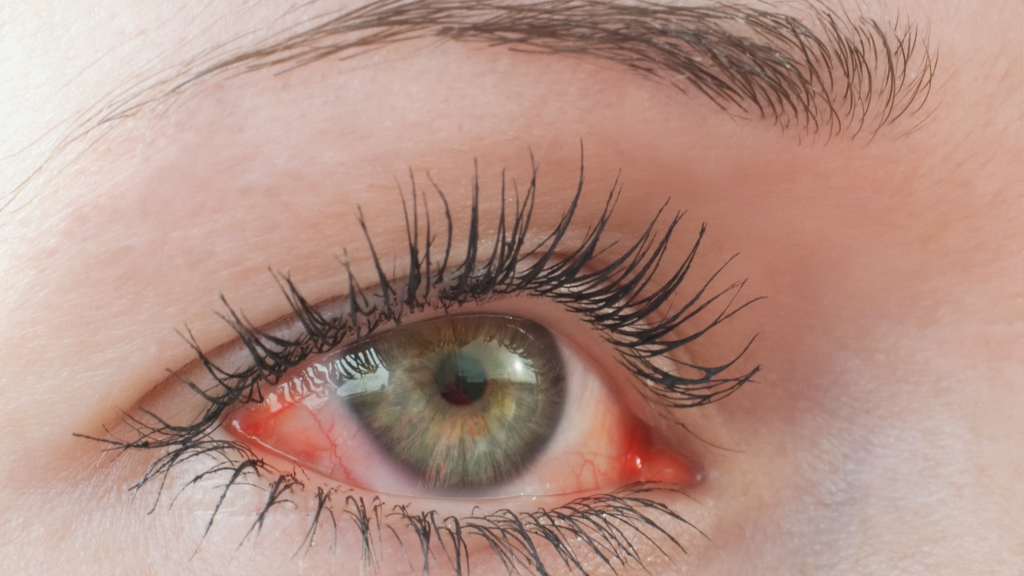
Your cornea is the clear, dome-shaped surface covering the front of your eye, kind of like a windshield for your vision. It’s thin, sensitive, and packed with nerve endings, which is exactly why even a tiny scratch feels so much worse than it looks. A corneal abrasion is simply a scratch on that surface. It can happen from a fingernail, a stray eyelash, a contact lens that shifted the wrong way, dust, sand, sawdust, a tree branch, or even the edge of a piece of paper.
The good news: most corneal abrasions are shallow and heal fast with the right care. The catch is that “the right care” starts in the first few minutes, not after you’ve already rubbed your eye a dozen times trying to make the feeling go away.
What to Do Right Now
- Stop what you’re doing and wash your hands first: It sounds like a small step, but touching your eye with dirty hands is how a simple scratch turns into an infection.
- Flush the eye with clean water or saline: Tilt your head so the affected eye points down and slightly to the side, then let clean, lukewarm water run gently across the surface for several minutes. If you have sterile saline solution at home, even better. The goal is to rinse away whatever caused the irritation, whether that’s a grain of sand, an eyelash, or a speck of dust. Don’t blast it with a strong stream straight from the tap. Gentle and steady wins here.
- Blink, blink, and blink again: Your natural tears are actually a decent first responder. Blinking helps spread tears across the surface and can help flush out small, loose particles on its own.
- Try the eyelid trick: If you can still see and it isn’t too painful, gently pull your upper eyelid down over your lower lashes and let go. This sounds strange, but the lower lashes can sweep debris out from under the upper lid.
- Take your contact lens out immediately: If you wear contacts and this happened while you had one in, remove it as soon as you can do so safely. A scratched cornea and a contact lens sitting on top of it is a bad combination, and continuing to wear it raises your infection risk significantly.
- Close your eye and rest it if flushing doesn’t work: If a few minutes of rinsing and blinking hasn’t cleared the discomfort, stop trying and keep the eye gently closed. Constantly opening and blinking a scratched eye can slow healing.
What You Should Never Do
This list matters just as much as the steps above, because the instinct to “just deal with it” is usually what makes things worse.
- Don’t rub your eye: This is probably the single most damaging thing you can do. Rubbing grinds whatever caused the scratch deeper into the surface and can turn a minor abrasion into a much bigger one.
- Don’t use tweezers, cotton swabs, or your fingers to dig something out: If you can’t remove it with gentle flushing and blinking, it needs a professional, not a DIY approach with household objects.
- Don’t try to remove anything that’s embedded or stuck: If something is lodged in your eye or your eye won’t close properly because of it, leave it exactly where it is and get to care right away.
- Don’t put your contact lens back in: Even if the pain settles down, keep contacts out until your eye has fully healed.
- Don’t just wait it out for days hoping it resolves: A little irritation that clears up within an hour is one thing. Pain that lingers, worsens, or comes with other symptoms is a different story, covered next.
Signs You Need Same-Day Care
Some scratches genuinely do settle down with basic first aid at home. Others need a same-day look from an optometrist. Here’s when to stop treating this at home and get in to be seen:
- Severe pain, worsening, or hasn’t improved after flushing and resting the eye
- Vision that’s blurry, hazy, or noticeably reduced
- A sensation that something is still in your eye even after rinsing and blinking
- Heavy light sensitivity, where even normal indoor lighting feels unbearable
- Redness that’s spreading or getting more intense rather than settling
- Any visible object stuck in the eye, or an eye that won’t close properly
- The injury came from something high-speed or high-force, like metal grinding, a workshop tool, or a branch snapping back
If any of those sound like what you’re dealing with, this isn’t a wait-and-see situation. A scratched cornea left untreated can become infected and, in more serious cases, develop into a corneal ulcer, which is a much harder problem to treat than the original scratch. Getting it checked quickly usually means antibiotic drops, a quick, comfortable exam, and peace of mind that you’re healing the right way. If you’re in Thornhill, Brampton, Barrie, or nearby and searching for emergency eye care near you, LMC Optometry & Eye Care can get you seen the same day for exactly this kind of injury.
If irritation lingers well after the injury itself has healed, or you’d rather have a fuller look at your eye’s overall health, LMC’s eye disease diagnosis and management service can help rule out anything else going on.
Frequently Asked Questions
What should I do if I scratch my eye or get something in it?
Flush the eye gently with clean water or saline, blink several times to help clear debris, remove any contact lens right away, and avoid rubbing the eye. If the pain doesn’t ease up within a short time, or if your vision is affected, get seen the same day.
How long does a corneal abrasion take to heal?
Most minor scratches heal within one to three days with proper care, like avoiding contact lenses and rubbing, and using any prescribed drops. Deeper scratches can take longer and should be monitored by an optometrist.
Can a scratched eye heal on its own without seeing a doctor?
Very minor irritation sometimes clears up on its own. But because scratched corneas are vulnerable to infection, it’s safest to have it checked, especially if pain, redness, or light sensitivity lasts more than an hour or two.
Should I rub my scratched eye to get relief?
No. Rubbing is one of the worst things you can do to a scratched cornea. It can deepen the scratch and increase your risk of infection or further irritation.
Is a corneal abrasion the same as an eye infection?
No. A corneal abrasion is a physical scratch on the eye’s surface. An infection can develop afterward if bacteria get into the wound, which is part of why prompt care and clean flushing matter so much in the first place.
When should I go to the ER instead of an optometrist for an eye injury?
Go to the ER if there’s a penetrating injury, a chemical splash, significant vision loss, or an object embedded in the eye. For a straightforward scratch or something that flushed out but still feels irritated, same-day emergency eye care with your optometrist is usually the right first call.
If you need to be seen today, book an appointment at your nearest LMC Optometry & Eye Care location.