

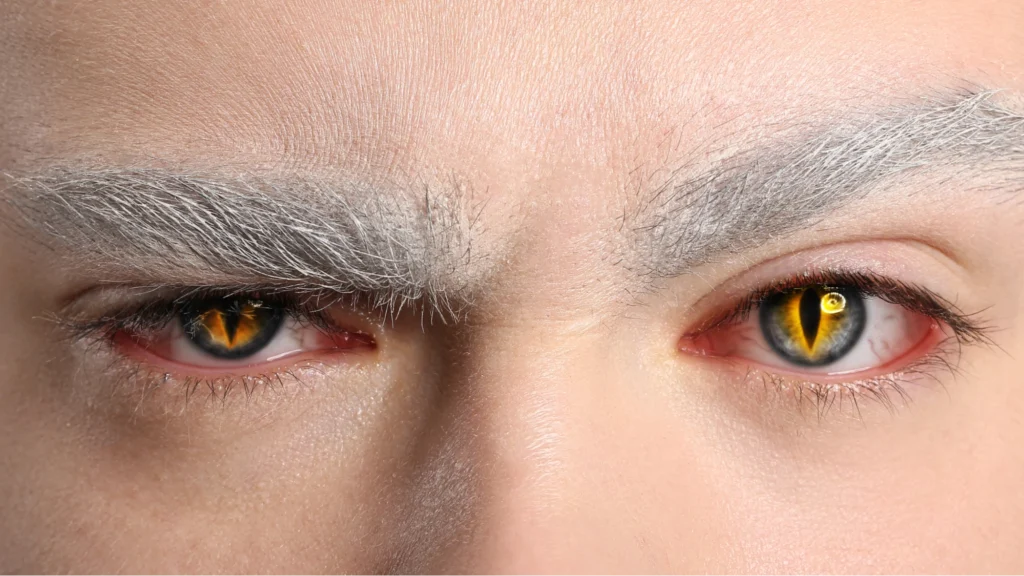
Halloween contact lenses can be safe, but only when they’re licensed, properly fitted, and worn the right way. The cat eyes, the solid white zombie stare, the glowing red vampire look: all of it is doable without putting your eyes at risk. The problem is the pair grabbed from a mall kiosk or a random online listing, where nobody knows if the lens was ever approved or if it fits your eye at all.
If you’re planning a costume, heading to a party, or getting ready for a cosplay event, this one’s for you. We’ll walk through what costume lenses actually do to your eyes, what Canada’s rules say, the habits that cause the most trouble, and how to get the look you want without a painful Monday morning. At LMC Optometry & Eye Care, we’re not here to cancel your costume. We just want your eyes to make it to November feeling as good as they look.
Are Costume Contact Lenses Actually Safe?
They can be, with a few big conditions.
A coloured or decorative lens sits right on your cornea, the clear dome at the front of your eye. That’s the same spot a regular corrective contact lens sits, and it carries the same risks. The cornea needs oxygen, a smooth surface, and a lens that moves just the right amount when you blink. A lens that’s too tight, too loose, or poorly made can rub, trap bacteria, or starve the cornea of oxygen.
The risk is higher than most people expect. A case-control study found that people wearing cosmetic contact lenses had a 16.5-fold higher risk of infection than people wearing lenses to correct their vision. That gap usually comes down to how the lenses are bought, fitted, and cared for, not the colour itself.
What Do Halloween Contact Lenses Do to Your Eyes?
Here’s what can happen when a costume lens doesn’t fit well or isn’t handled properly:
- Scratches on the cornea: A lens that sits wrong can scrape the surface of your eye, leaving it sore, watery, and sensitive to light.
- Infection: Bacteria can get trapped under the lens, especially after hours of wear, a night out, or a quick rinse with tap water.
- Redness and irritation: That bloodshot, gritty feeling the next morning is often your eye telling you something’s off.
- Lasting damage: Serious corneal infections can leave scarring that affects your vision long after the costume’s packed away.
Picture this. You put in a pair of white-out lenses at 7 p.m., the party runs past 2 a.m., and you crash on the couch without taking them out. You wake up with one eye burning and refusing to open in the daylight. That’s the scenario we see far too often after Halloween weekend, and it’s exactly the kind of thing that’s easy to avoid with a little planning.
What Are Canada’s Rules on Decorative Contact Lenses?
This is the part most online articles skip, because most of them are written for American readers.
Health Canada has regulated decorative contact lenses (also called cosmetic, coloured, or fashion lenses) as Class II medical devices since July 16, 2016. That means manufacturers need a Class II medical device licence to sell them in Canada. They were given a 12-month transition period, and optometrists and opticians have been advised not to buy or sell unlicensed decorative lenses after July 16, 2017. Distributors selling unlicensed decorative lenses in Canada may face enforcement action.
In plain terms, a coloured lens isn’t treated like eyeliner or face paint. It’s treated like a medical device, because that’s what it is.
The tricky part is that you can’t always tell a lens’s licence status by looking at the package. Novelty shops, beauty supply stores, and online marketplaces don’t always make it clear whether a lens has been licensed. If you’re not sure, that’s a good sign to get your lenses from an eye care professional instead.
“They Don’t Change My Vision, So They’re Basically Makeup,” Right?
This is the most common myth, and it’s an easy one to believe.
The colour is cosmetic. The lens isn’t. Whether it corrects your vision or not, it still touches your cornea for hours at a time. It still needs to match the curve and size of your eye. And it still needs proper cleaning and handling.
“One size fits all” doesn’t really apply to eyes. Your cornea has its own shape, and a lens that fits your friend comfortably might sit too tight or slide around on yours. That’s why a fitting matters, even for lenses with zero prescription.
The “my friend wore them and was fine” story is also worth a second look. Plenty of people get lucky once. That doesn’t make the next pair, the next night, or the next eye any safer.
Which Habits Cause the Most Trouble With Costume Lenses?
Most problems we see trace back to a handful of habits:
- Sleeping in them: Even one night can starve your cornea of oxygen and give bacteria the perfect warm, closed space to grow. If you’ve ever wondered what happens when you do, our post on sleeping with contacts breaks it down.
- Sharing lenses: Swapping lenses with a friend for a group costume swaps bacteria too. Never share contact lenses, even for a few minutes.
- Rinsing with tap water: Tap water isn’t sterile. Use only fresh contact lens solution.
- Reusing last year’s pair: That lens case in the drawer since last October? Toss it.
- Wearing them too long: Take them out as soon as the night winds down, not when you finally get home at 3 a.m.
What Should You Do If Your Eyes Hurt After Wearing Costume Lenses?
Take the lenses out right away and don’t put them back in.
Then pay attention to how your eye feels. If you notice redness that won’t settle, pain, blurry vision, discharge, or sensitivity to light, get your eye checked as soon as possible rather than waiting it out. Infections can move quickly, and early care makes a real difference. Keep the lenses and the case, since they can help your eye doctor figure out what went wrong. If you’re searching for an “optometrist near me” in Barrie, Thornhill, or Brampton, any LMC location can help you get seen.
Frequently Asked Questions
Can you buy coloured contacts without a prescription in Canada?
You can find them sold in some stores and online, but that doesn’t mean they’re licensed or fitted for your eyes. Decorative lenses are regulated as Class II medical devices in Canada, and getting them through an eye care professional is the safest way to know what you’re putting in your eye.
How long can you wear Halloween contacts?
As short a time as you reasonably can, and never overnight. Your optometrist will give you a wear time based on the specific lens and your eyes, so follow that rather than guessing.
Can you sleep in coloured contacts?
No. Sleeping in any lens not approved for overnight wear cuts off oxygen to your cornea and raises your risk of infection. Take them out before you lie down, even for a nap.
Are coloured contacts safe if I already wear regular contacts?
They can be, but a new lens still needs its own fitting. Coloured lenses can fit and feel different from your usual pair, so check with your optometrist before switching, even for one night.
Can you share Halloween contact lenses with a friend?
No. Sharing lenses passes bacteria directly from one eye to another, and a lens fitted for one person may not fit someone else.
Why are my eyes red after wearing costume contacts?
Redness can come from irritation, a scratch on the cornea, or the start of an infection. Remove the lenses and get your eyes checked if the redness doesn’t settle or comes with pain, blurriness, or light sensitivity.
Get the Look Without the Risk
Your costume should be the thing people remember, not a trip to get a scratched cornea treated. Costume and novelty contact lenses can cause serious eye problems, including infections, corneal scratches, and lasting damage to your vision. This Halloween, let your makeup and outfit do the talking and keep your eyes safe. And if your eyes are already red, painful, or sensitive to light after wearing costume lenses, don’t wait it out. Book a visit with LMC Optometry & Eye Care so we can take a look.