

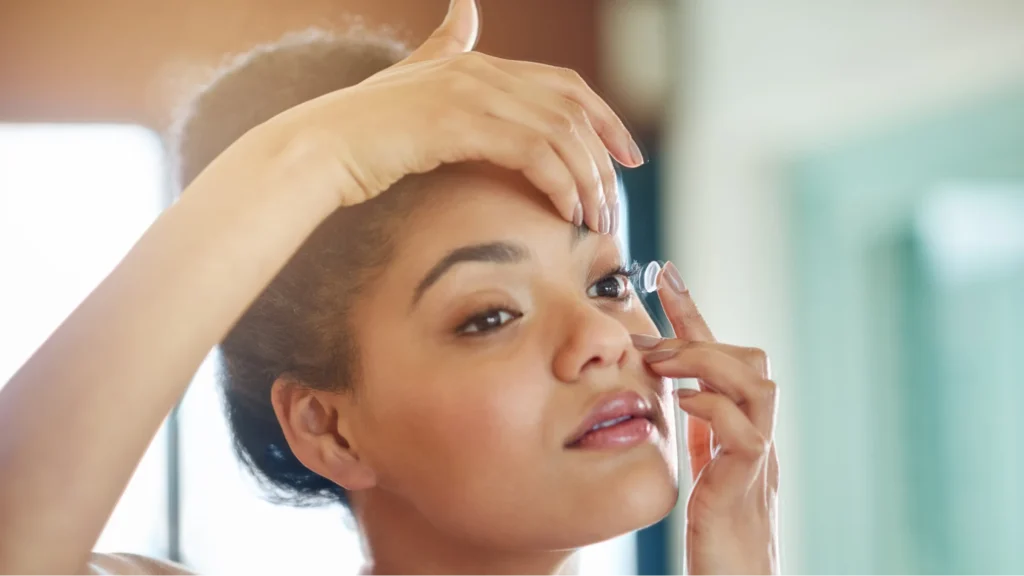
If you’ve ever pushed your glasses back up your nose mid-workout, watched them fog up on a cold Ontario morning, or wished the frames weren’t there in a photo, you’re not alone. Glasses get the job done, but the daily frustrations stack up.
Contact lenses have come a long way. Today’s options are breathable, comfortable, and available in designs that work for astigmatism, presbyopia, dry eyes, and more. Whether you’re an athlete, a teen looking to feel more confident, or a professional who wants a wider field of vision, contacts could be a game-changer.
Below, we’ll walk through the real benefits of contact lenses compared to glasses, from sharper peripheral vision and greater freedom for active lifestyles to modern lens technology that’s made them safer than ever.
Wider, Unobstructed Vision That Moves With You
One of the biggest advantages of contact lenses over glasses is peripheral vision. Glasses sit about 12mm in front of your eyes and create a border around your field of view: distortion at the edges, blind spots on the sides, and a sense that you’re looking through something.
Contacts sit directly on your eye and move with it. Glance left or right, and the lens follows. No frame cutting off your side vision, no reflections. For driving, playing sports, or navigating a crowded space, that full field of clear vision makes a real difference.
Built for Movement: Contact Lenses and Active Lifestyles
Anyone who’s tried to play basketball, go for a run, or do a yoga headstand in glasses knows the struggle. Frames slip when you sweat, bounce with every stride, and if you take an elbow to the face, there’s a real risk of breakage.
Contact lenses eliminate all of that. They’re lightweight, stable, and secure. They don’t fog up moving between cold and warm spaces. They don’t interfere with helmets, goggles, or protective gear. For athletes and weekend warriors, contacts let you focus on the game instead of your glasses.
Confidence Without Frames
Some people love how they look in glasses, and that’s great. But plenty of others feel self-conscious about their frames, whether it’s for professional headshots, social events, or everyday life. Teens can be especially affected. The CDC has noted that children and teens who switch to contact lenses often report feeling significantly better about their appearance and more confident in social and athletic settings.
Contacts let you show your face without any barrier. Your makeup looks the way you intended, your expressions come through on video calls, and you’re not matching frames to outfits. For many people, it’s a small shift with a surprisingly big impact.
Modern Lens Technology Has Changed the Game
If you tried contacts years ago and had a bad experience, the technology has evolved. Today’s silicone hydrogel lenses allow up to five times more oxygen to reach your cornea than older materials, meaning healthier, more comfortable eyes even during long days. It’s now the most commonly prescribed soft lens material.
Common contact lens types include:
• Daily disposables: A fresh pair every day with no overnight cleaning. Great for allergies or dry eyes since there’s no solution buildup.
• Monthly contact lenses: Reusable for up to 30 days with proper nightly care. Cost-effective for everyday wearers.
• Toric contact lenses: Designed for astigmatism, weighted to stay in place and prevent blurry rotation.
• Multifocal contact lenses: Correct both near and distance vision in a single lens for those over 40 dealing with presbyopia.
At LMC Optometry & Eye Care, we fit patients with all of these lens types and help match the right option to their prescription, lifestyle, and comfort level.
Contact Lenses for Specific Vision Needs
There’s a common misconception that contacts “won’t work” for certain conditions. That’s no longer the case.
Toric contacts provide stable, clear vision for astigmatism. Silicone hydrogel dailies can improve comfort for dry eye sufferers with a fresh, hydrated lens each morning. And multifocal contacts offer near-and-far correction for presbyopia that even progressive glasses sometimes struggle to match.
The key is a proper contact lens fitting exam where your optometrist measures corneal shape, evaluates your tear film, and trials lenses for the best fit. It’s personalized, and that’s why it works.
Are Contact Lenses Safe? What You Should Know
Safety is one of the first things people ask about. The short answer: yes, contact lenses are safe when worn and cared for properly. Most complications come down to hygiene: sleeping in lenses not designed for it, rinsing cases with tap water, or wearing disposables past their replacement date.
Serious eye infections like microbial keratitis affect a very small percentage of wearers. Daily disposable lenses carry the lowest risk at roughly one infection per 5,000 wearers per year. For parents, studies show complication rates in teens are comparable to, and sometimes lower than, those in adults.
The basics: wash your hands before handling lenses, follow the replacement schedule, never sleep in contacts unless approved for overnight wear, and keep up with eye exams. At LMC Optometry & Eye Care, we walk every patient through proper care during their fitting.
Teens and Contact Lenses: A Guide for Parents
If your teenager has been asking about contacts, you’re probably balancing their excitement with concerns about responsibility. That’s normal.
There’s no fixed minimum age. What matters is maturity and willingness to follow a care routine. Daily disposables are ideal for teens because they need zero overnight cleaning. Many teens thrive with contacts because the benefits are immediately motivating: better confidence, fuller participation in sports, and no worrying about broken glasses at school.
You Don’t Have to Choose Just One
Switching to contacts doesn’t mean ditching glasses entirely. Many people keep a pair for evenings at home or days when their eyes need a rest. Having both gives you flexibility for every part of your life.
Frequently Asked Questions About Contact Lenses
What are the benefits of contact lenses compared to glasses?
Contact lenses provide a wider, unobstructed field of vision because they sit directly on your eye and move with it. They don’t fog up, slip, or bounce during activity, and they’re available in specialized designs for astigmatism, presbyopia, and dry eyes.
Are contact lenses safe for everyday wear?
Yes. Contact lenses are safe when cared for properly. Daily disposable lenses carry the lowest risk. Following your optometrist’s instructions on cleaning, replacement, and handling keeps your eyes healthy.
Can you wear contact lenses if you have astigmatism or dry eyes?
Absolutely. Toric lenses are designed specifically for astigmatism, and silicone hydrogel dailies are often recommended for dry eye sufferers because they allow more oxygen to reach the cornea and start fresh each day.
At what age can teens start wearing contact lenses?
There’s no strict minimum age. Readiness depends on maturity and willingness to follow a care routine. Many optometrists fit teens as young as 12 or 13 with daily disposable lenses.
How do I get a contact lens prescription?
A contact lens prescription requires a fitting exam beyond a standard eye exam. Your optometrist measures your corneal curvature, assesses your tear film, and trials lenses to find the best fit. If you’re searching for a “contact lens exam near me,” LMC Optometry & Eye Care offers comprehensive fittings at our Barrie, Thornhill, and Brampton locations.
Ready to See What Contacts Can Do for You?
If you’ve been thinking about making the switch or want to explore whether contacts are right for your eyes, the next step is a contact lens fitting. At LMC Optometry & Eye Care, our team will guide you through your options, find the right lenses, and make sure you’re comfortable from the first wear. Book your appointment today.