
You wake up and something’s off. Maybe your eye is red and crusty. Maybe there’s a tender bump forming on your eyelid that was not there yesterday. Or your kid came home from school with one eye that looks like a tomato. Your first thought is probably pink eye, but it could be a stye, and the two conditions are not the same thing at all.
Both conditions cause redness and irritation, which is what makes them so easy to mix up. But they have different causes, different symptoms, and different treatments. Reaching for the wrong remedy delays relief. The team at LMC Optometry & Eye Care sees both regularly, and here is what you need to know.
What Is a Stye?
A stye, medically called a hordeolum, is a small, painful lump that forms along the edge of the eyelid. Think of it as a pimple on your eyelid. It happens when bacteria infect one of the oil glands or hair follicles near the base of your eyelashes.
Styes can appear on the outside of the eyelid, which is the more common type, or they can develop on the inside of the lid, closer to the eye itself. Either way, the area around the bump gets red, swollen, and tender to the touch. Some people notice a small white or yellow tip forming at the centre of the bump, similar to a whitehead pimple.
Common triggers include rubbing your eyes with unwashed hands, sleeping in your makeup, or poor contact lens hygiene. People with rosacea are also more prone to styes because that condition affects the skin’s oil glands, including those near the eye.
Stye Symptoms to Watch For
- A noticeable red bump on the upper or lower eyelid
- Pain or tenderness when you touch the area
- Swelling that may feel warm to the touch
- Watery eyes and some general eye irritation
- A gritty or scratchy sensation, as if something is in your eye
- Possible light sensitivity if the stye is large
The key detail: the redness and swelling stay localized. It is not spreading across the entire eye.
What Is Pink Eye?
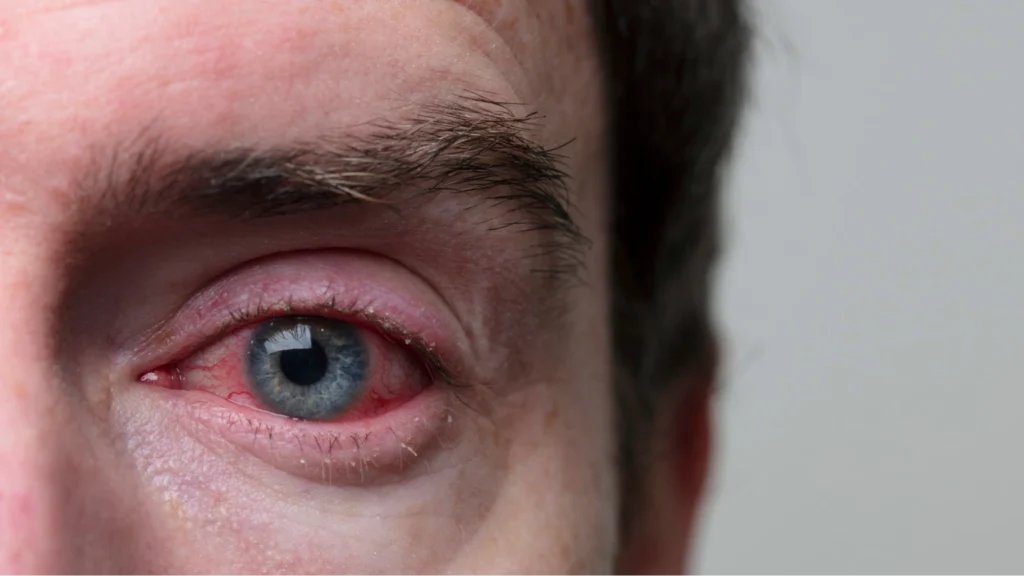
Pink eye, or conjunctivitis, is an inflammation of the conjunctiva, the thin clear membrane that lines the inside of your eyelids and covers the white part of your eye. When the tiny blood vessels in that membrane become inflamed, they show up as a pink or red tint across the entire visible surface of the eye.
Unlike a stye, which is always caused by bacteria infecting a gland, pink eye has three different possible causes, and that changes how you treat it.
Viral Pink Eye
This is the most common type. It is often linked to the same viruses that cause the common cold. Your eyes water heavily, there may be clear discharge, and the redness typically starts in one eye before jumping to the other. It is highly contagious and, in most cases, clears up on its own within 7 to 14 days.
Bacterial Pink Eye
Bacterial pink eye produces thicker, yellow or greenish discharge that can glue your eyelids shut overnight. It is also highly contagious and spreads easily in schools, daycares, and workplaces. This is the type that usually requires antibiotic eye drops.
Allergic Pink Eye
This version is triggered by allergens like pollen, pet dander, or dust. Both eyes are usually affected at the same time, and the itching tends to be intense. The good news: allergic conjunctivitis is not contagious. Antihistamine eye drops or oral allergy medications typically manage the symptoms.
Pink Eye Symptoms to Watch For
- Redness across the white part of one or both eyes
- Itching, burning, or gritty feeling in the eye
- Watery or sticky discharge (clear for viral, thick and yellow-green for bacterial)
- Crusting along the eyelids, especially when waking up
- Swollen eyelids
- No visible lump or bump on the eyelid
The Clearest Difference Between a Stye and Pink Eye
Here is the single most reliable way to tell them apart: run your finger gently along your eyelid. If you feel a distinct, tender bump or lump, that is almost certainly a stye. Pink eye does not cause bumps. It causes widespread redness and discharge across the whole eye surface, but no lump.
Another useful clue is location. A stye’s redness and swelling stays right around the bump, usually near the lash line. Pink eye’s redness spreads over the entire white of the eye. With a stye, you might also notice that the discomfort is concentrated in one specific sore spot rather than a general all-over irritation.
If both eyes are red at the same time, that is a stronger sign of pink eye, especially allergic or viral. Styes almost always affect just one eye, and only one eyelid at a time.
How to Treat a Stye at Home
The most effective first step is a warm compress. Wet a clean cloth with warm water, wring it out, and hold it gently against your closed eyelid for 10 to 15 minutes, three to four times per day. The heat helps soften the blockage in the oil gland and encourages the stye to drain naturally.
Most styes begin to resolve within a few days and typically heal completely within one to two weeks. A few things to keep in mind while you wait it out:
- Never squeeze or pop a stye. The bacteria inside can spread to surrounding tissue and make things significantly worse.
- Skip the eye makeup until the stye is fully healed.
- Take a break from contact lenses during this time.
- Wash your hands before and after touching the area around your eye.
How to Treat Pink Eye at Home
Treatment for pink eye depends on which type you have. Viral pink eye usually works itself out without any medication, though it can feel quite uncomfortable for a week or two. Cold compresses and over-the-counter artificial tear drops can take the edge off the irritation while your immune system does its job.
Bacterial pink eye may need antibiotic eye drops prescribed by an eye doctor or physician. Symptoms usually start improving within two to five days of starting treatment. Allergic pink eye responds to antihistamine drops or oral allergy medications, plus avoiding whatever triggered the reaction in the first place.
Because pink eye can be so contagious, keep a few things in mind:
- Wash your hands frequently and thoroughly.
- Do not share towels, pillowcases, or washcloths.
- Switch to glasses instead of contact lenses until your eyes clear up.
- If you have bacterial or viral pink eye, stay home until symptoms improve.
When to Stop Managing It Yourself and See an Eye Doctor
Most styes and mild cases of pink eye resolve without professional help. But there are clear signs that it is time to book an appointment.
For a stye, see an eye care provider if:
- It has not improved after one week of warm compresses
- It is growing larger or becoming more painful
- It is pressing on your eye and affecting your vision
- You are getting styes repeatedly
For pink eye, see an eye care provider if:
- Symptoms have not improved after 48 hours
- You notice yellow or green discharge that is getting worse
- Your vision becomes blurry or light is causing pain
- A child under five is affected
- You wear contact lenses and symptoms started while wearing them
When in doubt, it is always worth getting checked. An eye exam can confirm exactly what you are dealing with and help you get the right treatment faster. At LMC Optometry & Eye Care, our team is available to assess your symptoms at any of our Ontario clinic locations.
Frequently Asked Questions
Can you have a stye and pink eye at the same time?
Yes, it is possible to have both at the same time, though it is not very common. If you notice a bump on your eyelid and widespread redness across the whole eye with discharge, it is worth seeing an eye doctor to get a clear diagnosis and appropriate treatment plan.
Is a stye contagious?
A stye itself is generally not considered contagious in the way pink eye is. However, the bacteria that cause it can transfer to another person through direct contact with infected discharge or shared items like towels and pillowcases. Good hand hygiene and not sharing personal items reduces the risk.
How long does a stye last?
Most styes begin to improve within a few days of starting warm compresses. They typically drain on their own and heal fully within one to two weeks. If a stye persists beyond two weeks or keeps coming back, it is worth talking to an optometrist.
How long does pink eye last?
The duration depends on the type. Viral pink eye usually clears up within 7 to 14 days. Bacterial pink eye treated with antibiotic drops typically improves within 2 to 5 days. Allergic pink eye can last as long as the allergen exposure continues.
Should I go to an optometrist or a walk-in clinic for pink eye or a stye?
Either can help with an initial assessment, but an optometrist has specialized tools and training to examine your eyes in detail. If you are looking for an optometrist near you in Ontario, a dedicated eye care clinic like LMC Optometry & Eye Care can give you a thorough exam, confirm your diagnosis, and provide targeted treatment rather than a general approach.
Can a stye turn into something more serious?
In rare cases, an untreated stye can develop into a more widespread eyelid infection called cellulitis, or it can become a chalazion, which is a persistent painless cyst that may not resolve without professional treatment. This is why it is important not to pop a stye and to seek care if it is not improving.
Not Sure What You Are Dealing With? We Can Help
Eye symptoms can be stressful, especially when they come on fast or affect your kids. Whether you are waking up to a crusty, sealed-shut eye or nursing a painful bump on your eyelid, you deserve a clear answer and real relief.
At LMC Optometry & Eye Care, our team of experienced optometrists is here to take the guesswork out of it. We will examine your eyes, confirm whether it is a stye or pink eye (or something else entirely), and walk you through the best treatment options for your specific situation.
Book an appointment at your nearest LMC Optometry & Eye Care location today. Your eyes will thank you.